

Price Match Promise
Seen a similar kitchen for cheaper? We’ll match the price.
20% off stone worktops until 11th November* Find out more
Splashback or upstand? It’s a small detail that can change the whole feel of your kitchen. This guide helps you weigh up the differences and choose what works best for your space.
Published
Splashback or upstand? It sounds like a finishing detail, but this choice affects how your kitchen feels to use every day. They’re there to protect your walls from heat, steam and splashes, especially in the parts of the kitchen that get the hardest use.
This guide helps you decide which suits your kitchen and how you use it, not just how it looks online.
Think about how you cook on a normal weeknight. If you’re using the hob regularly, dealing with splashes, steam and the odd pan that spits, a full stainless steel or glass splashback behind the hob does a much better job of protecting the wall. It gives you a surface you can wipe down quickly without worrying about marks building up over time.
Upstands are lower and more subtle but not suited for placement behind hot areas such as a hob. They’re great along prep runs, where spills are lighter and more occasional. They protect the wall where it meets the worktop, without covering a large area.
Most kitchens end up using both, whether intentionally or not.

Stainless steel splashbacks are all about practicality. They cope well with heat, steam and splashes, which makes them a good choice behind the hob if you cook often. They wipe down easily and don’t mind a bit of hard use. Over time, they tend to develop a lived in look rather than needing to stay pristine.
Glass splashbacks offer a smoother, more polished finish. They’re also a great place to introduce colour or a different finish without taking it across the whole kitchen. A bold splashback can lift a neutral scheme. A metallic finish can introduce a new finish to the kitchen. Because it sits in a defined area, it’s a low risk way to add personality without overwhelming the room.
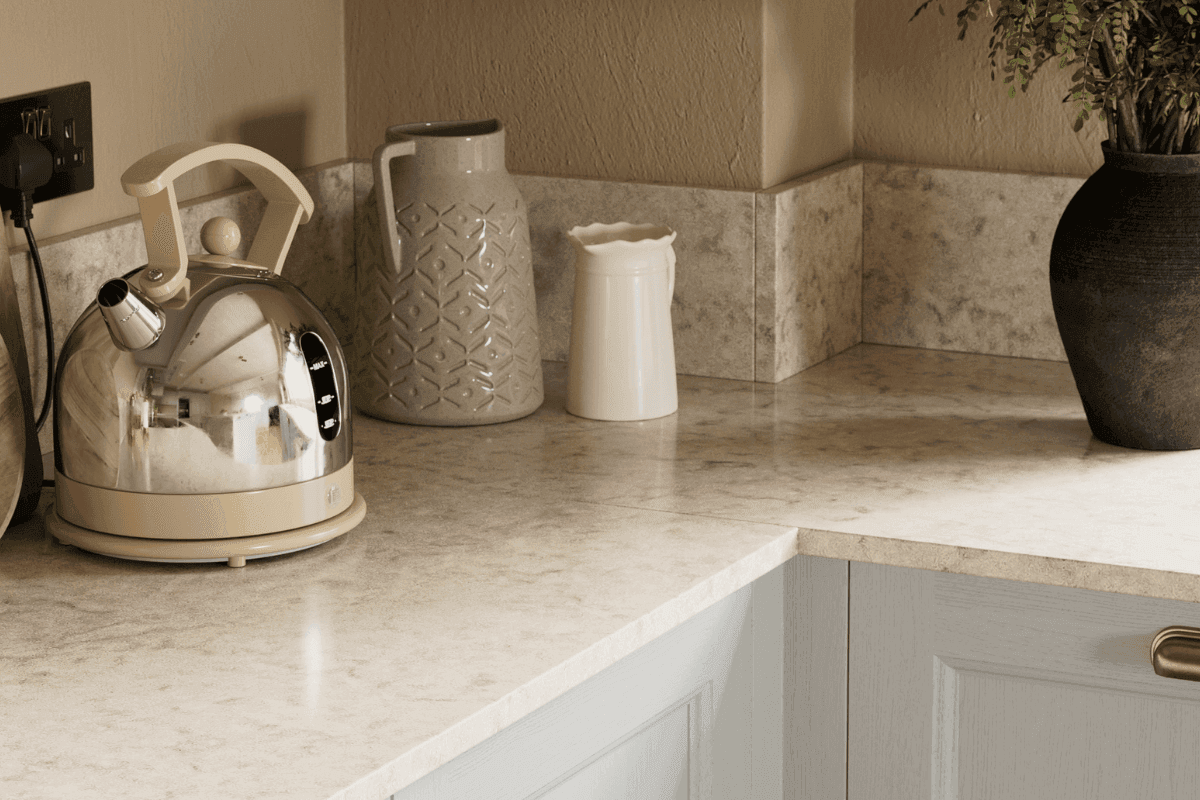
An upstand is a 100mm high laminate strip, fitted at the back of the worktop where it meets the wall. It’s made from the same material as the worktop, so it creates a neat, continuous finish without becoming a feature in its own right.
Upstands work well in areas where splashes are lighter, like prep runs or breakfast areas. They protect the wall at its most vulnerable point and keep cleaning simple, while letting cabinets, worktops or splashbacks elsewhere take the lead. If you like a clean, understated look, an upstand quietly does its job without drawing attention.
Splashbacks and upstands don’t need to be an either or decision. Many kitchens use a mix, adding extra protection where cooking happens and keeping things pared back elsewhere.
Seen a similar kitchen for cheaper? We’ll match the price.

Service that just gets it right, every time.

We’ve been building kitchens a long time.

Made right here in our Sussex factory.