

Price Match Promise
Seen a similar kitchen for cheaper? We’ll match the price.
20% off stone worktops until 11th November* Find out more
A straightforward way to choose a kitchen door that suits how you really live.
Published
Kitchen doors set the tone for the room, shape the style and take the daily knocks of real life from breakfast rushes to someone leaning while the kettle boils. Choosing the right one isn’t about trends. It’s about finding a door that suits your home, your habits and how you want the kitchen to feel.
Before looking at specific door styles, think about the overall feel you're trying to create. Do you want something warm and welcoming? Clean and contemporary? Traditional with modern touches? The door style sets the tone for the entire kitchen and often has a bigger influence than people realise. We've seen customers arrive convinced they've already chosen a colour, only to discover that changing the door style completely changes how that colour feels in the room.
Tamsin Holland, Product Development Manager
It’s also worth noting the home you’re living in. An older home, such as a cottage with traditional wooden beams, may suit a more tradition shaker kitchen style. A contemporary home with a new extension may suit cleaner slab doors. That said, you don’t have to follow tradition. Mix it up!
Kitchen feel checklist:
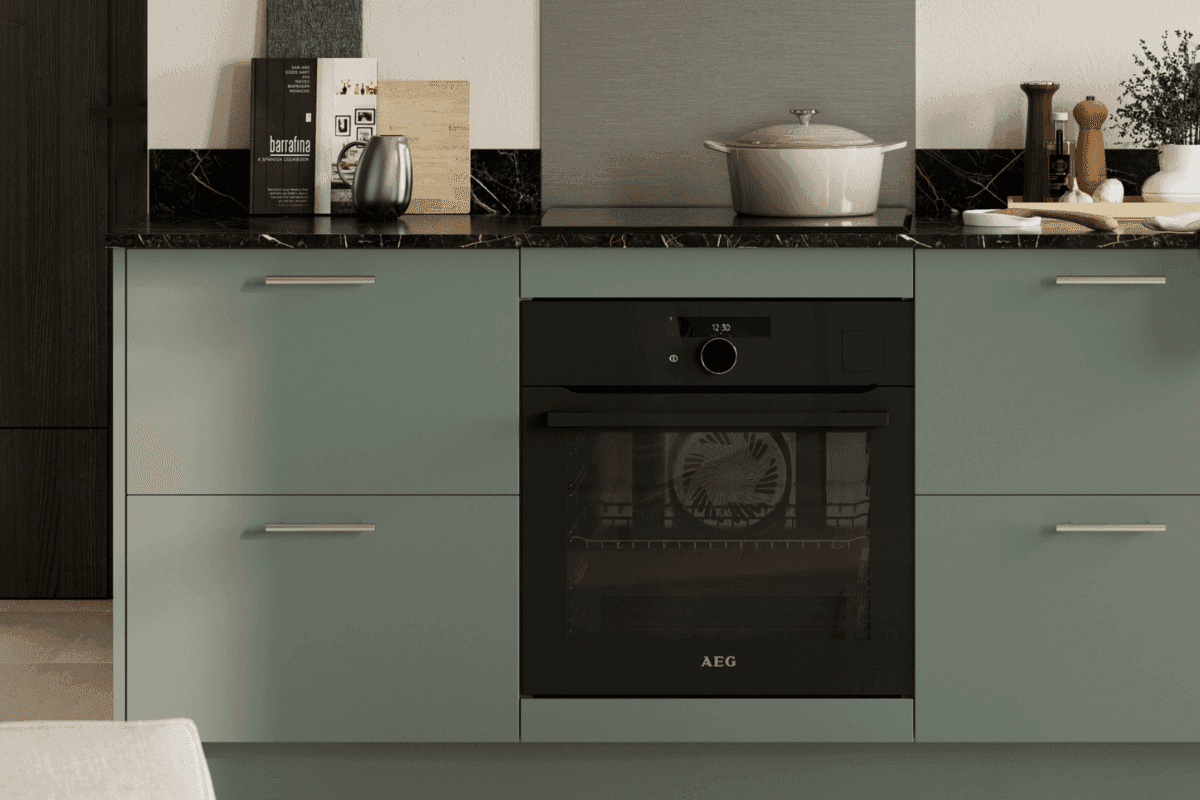
If you’re drawn to clean lines and a more contemporary look, a slab door is usually the place to start. It’s flat and fuss free with no framing and very limited decorative detailing. The simplicity makes it an incredibly versatile option for your kitchen. It works especially well in smaller kitchens where too much detail can make the space feel busy.
We’re seeing more homeowners pair slab doors with richer colours and textures. Whether that's a pop of Ilminster on the island or a splash of Hythe on the wall units, mixing colours and textures can help break up larger runs of cabinetry and give different areas of the kitchen their own purpose.
Tamsin Holland, Product Development Manager


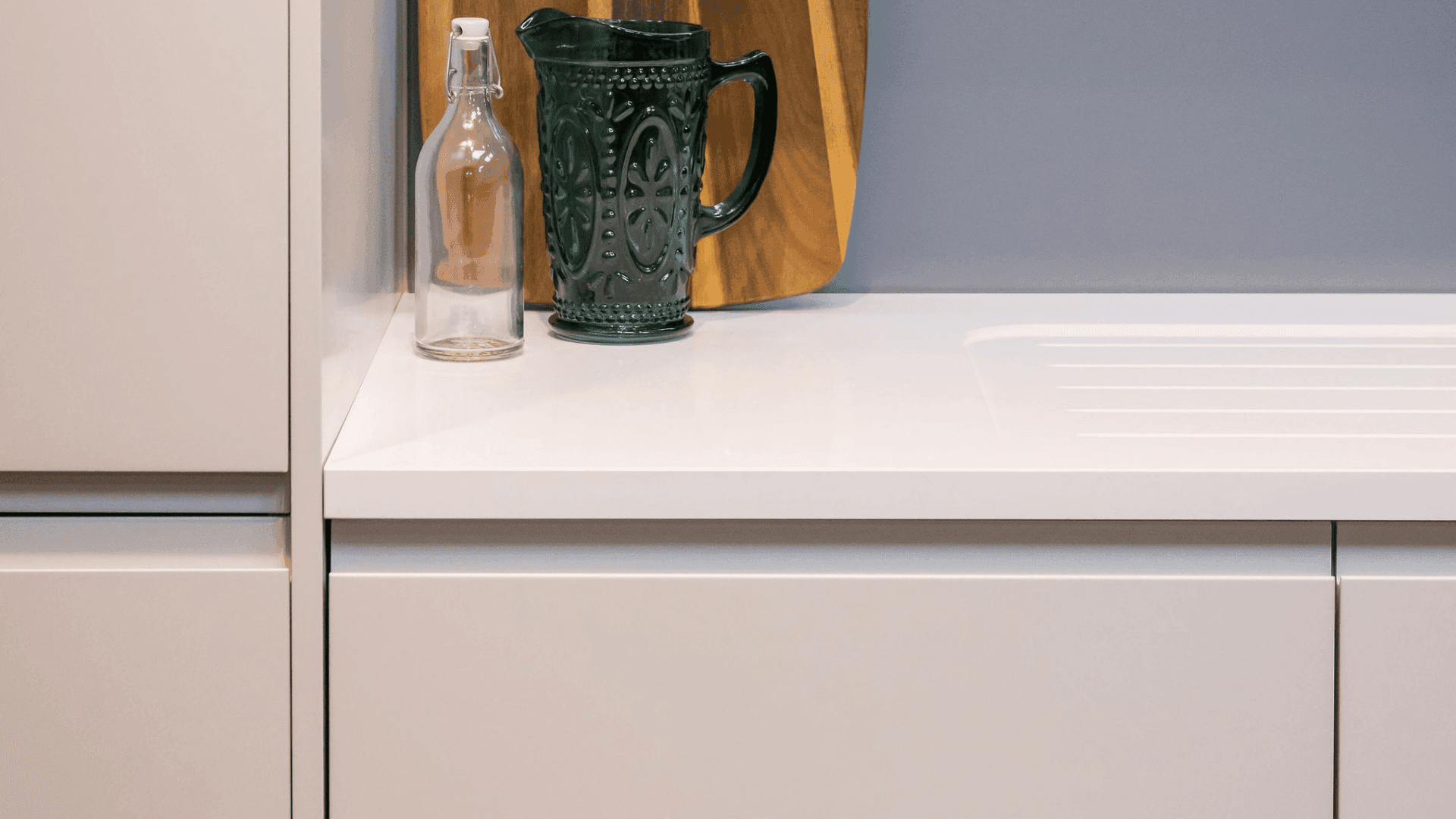
J Pull doors are often grouped under the handleless umbrella, by they work slightly differently.
Instead of adding a rail to make the kitchen handleless, or your chosen pull handle, the grip is built directly into the door itself. This creates a streamlined appearance while still giving you a comfortable place to open cupboards and drawers. Our Fontwell and Manhattan ranges show this effortlessly.
For homeowners who love the clean look of handleless kitchens but want something that feels immediately familiar to use, J Pull is often a great middle ground.
From a practical point of view, J-Pull kitchens also tend to work well in busy family homes. There's nothing protruding from the cabinetry, helping movement around the room feel a little easier, particularly in narrower layouts or open-plan spaces.


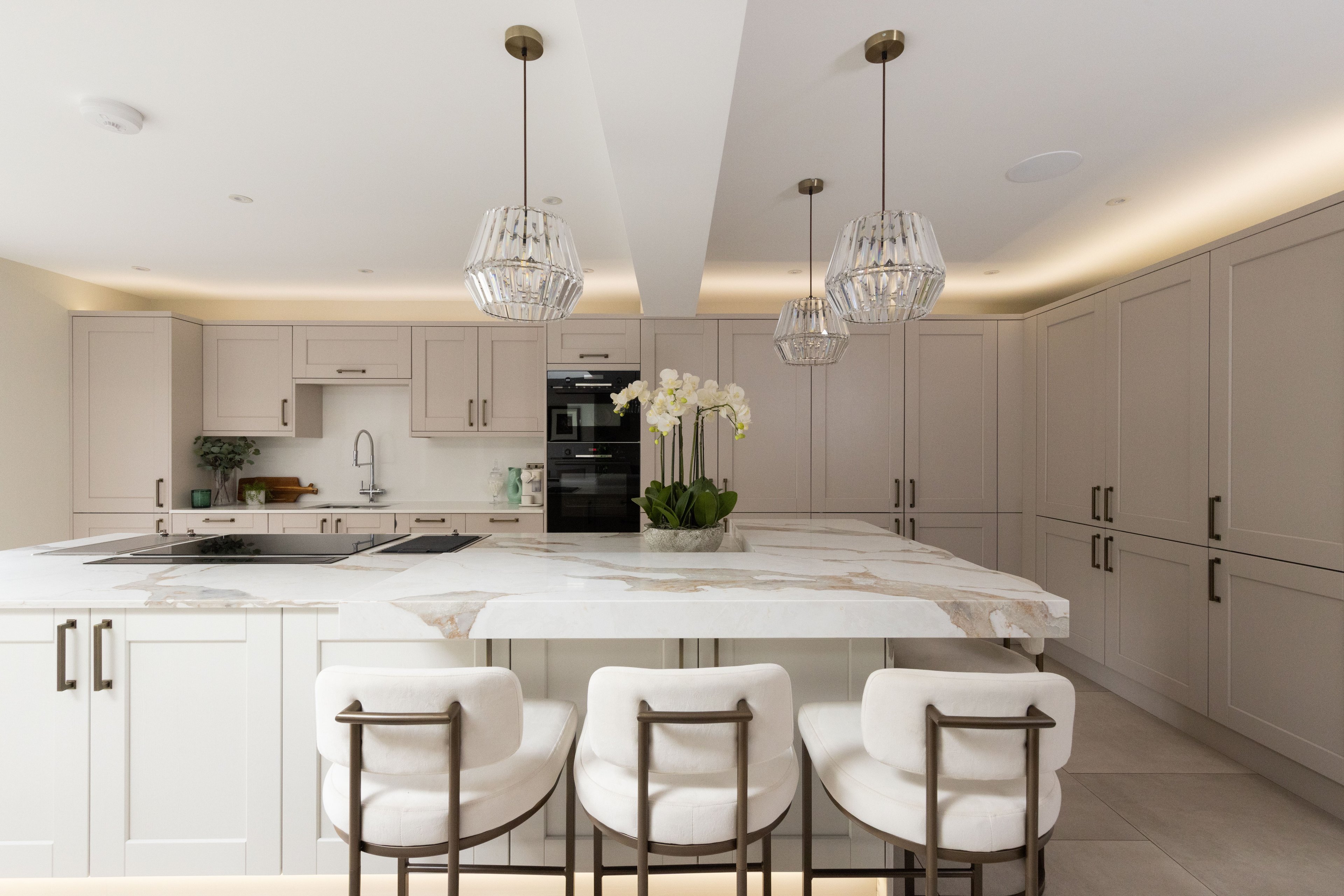
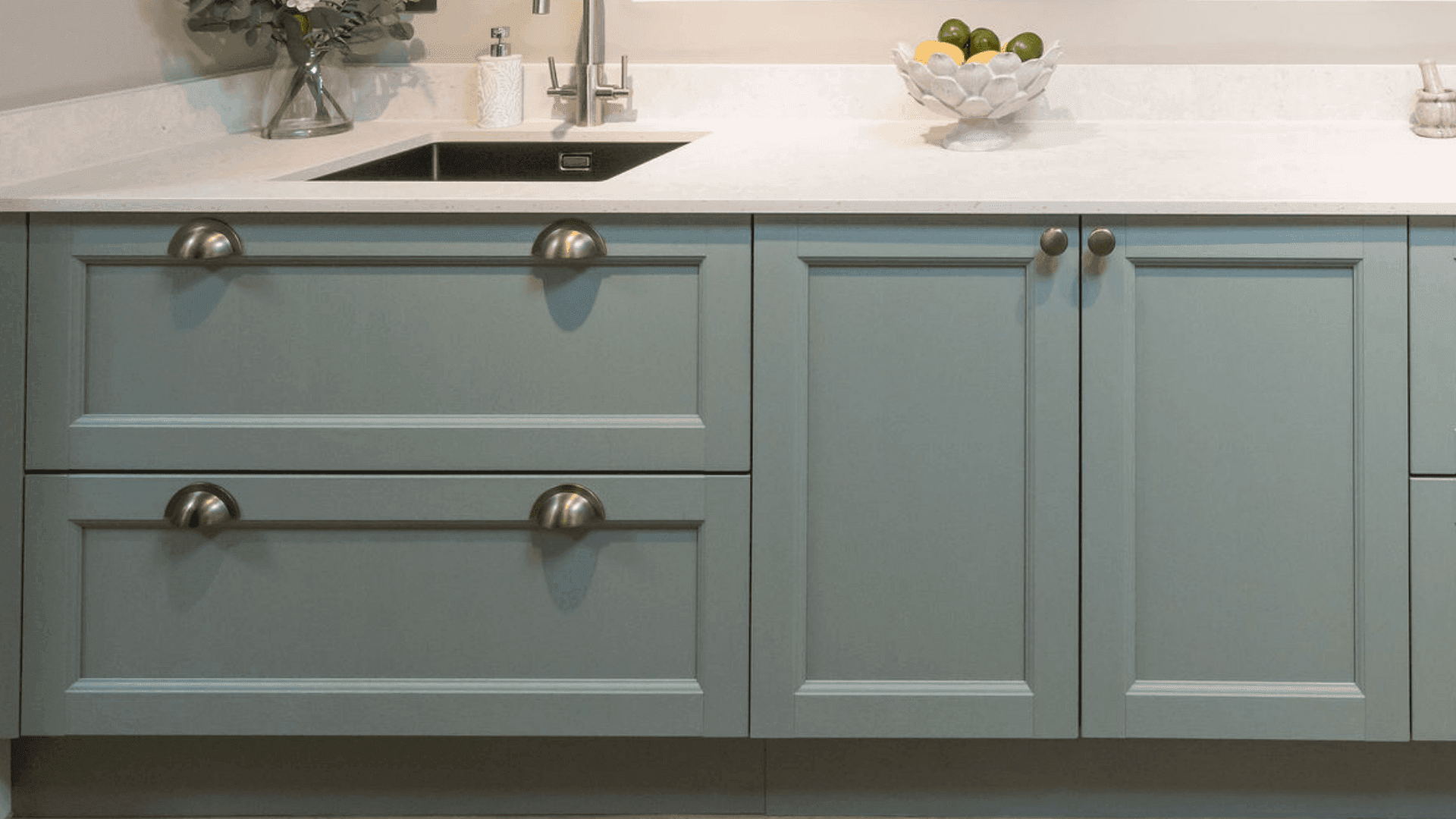
If you're looking for a door style that feels at home almost anywhere, it's hard to ignore a shaker.
The framed design has been around for generations, but one of the reasons it remains so popular is its ability to adapt. In some homes, a shaker kitchen feels traditional and full of character. In others, it feels surprisingly modern, particularly when paired with contemporary colours, statement handles or a sleek worktop.
Some designs blur the lines between traditional and contemporary beautifully. Take our Fontwell range, for example. It combines the familiar character of a shaker door with an integrated J-Pull handle, creating a kitchen that feels both modern and welcoming.
For a shaker style with a little more character, our Arundel range introduces subtle beaded detailing, while Petworth's in-frame design adds a more furniture-inspired feel. Both create the sort of kitchen people naturally ask about when they visit, with the finer details often becoming the talking point long after the kettle's boiled.
Tamsin Holland, Product Development Manager


Handleless is less of a door style, more of a door feature. It allows almost any flat or shaker style door be used without a traditional handle, creating a clean, uninterrupted run of cabinetry.
One of the benefits of handleless design is its flexibility. Many shaker and slab doors can be adapted to create a handleless kitchen, allowing you to enjoy the clean-line look without sacrificing the door style you love.
The exception is ranges such as Fontwell and Manhattan. While they don't use traditional handles, they already have an integrated J-Pull grip built directly into the door. In other words, the handle is part of the design itself, so there's no need to add a separate handleless rail.
This is a great option for homeowners looking for a kitchen that feels calm, uncluttered and easy to live with. Particularly in open-plan spaces, removing visible handles can help long runs of cabinetry feel a little softer and less busy.
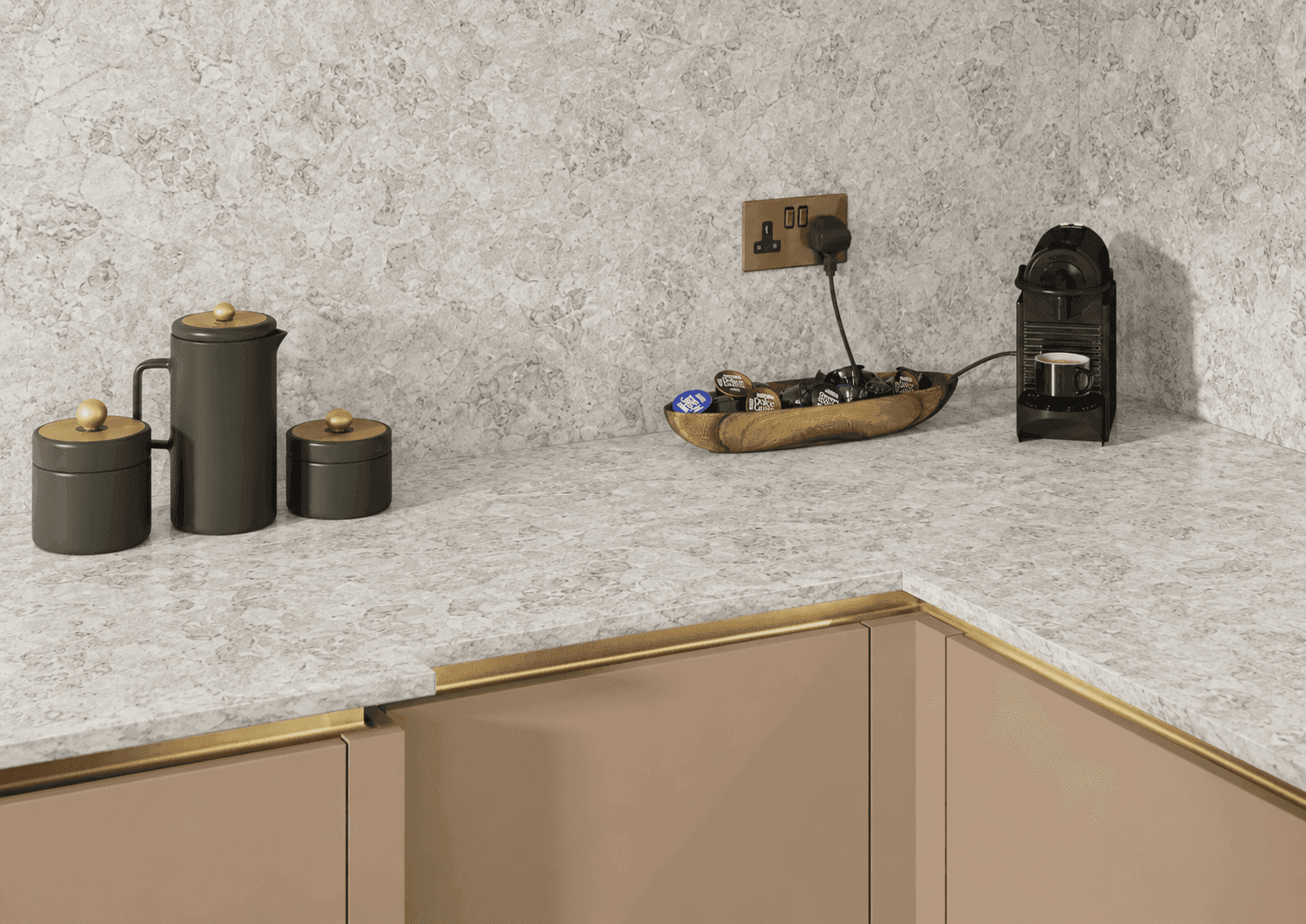
Once you've narrowed down the door style, it's time to think about the finish.
This is one of those decisions that often gets overlooked at first, but it can have a huge impact on how the kitchen feels day to day. Think about the size of your kitchen is and who uses it day-to-day.
Matt finishes soften light and are far more forgiving with fingerprints, making them a good choice for busy homes. Gloss finishes such as our Jackson range reflect light and can help smaller kitchens feel brighter, but they do show marks more easily. If you’ve got pets or little hands in the mix, that’s worth factoring in.
Painted doors often feel more natural and warmer, age gracefully over time, but they do need a little care. Wrapped finishes are more robust, and a low maintenance option. They’re more resistant to everyday knocks and moisture, and well suited to homes where the kitchen works hard all day.
Texture can make just as much difference. A woodgrain finish adds warmth and character, while smooth doors create a cleaner, more uniform look. If you're drawn to something a little more tactile, ranges such as Hythe introduce texture in a subtle way, helping larger kitchens feel less flat. For a smoother appearance, Franklin and Hamilton both offer beautiful woodgrain options, while Ilminster brings the additional benefit of a super matt anti-fingerprint finish.
Texture and finish checklist:
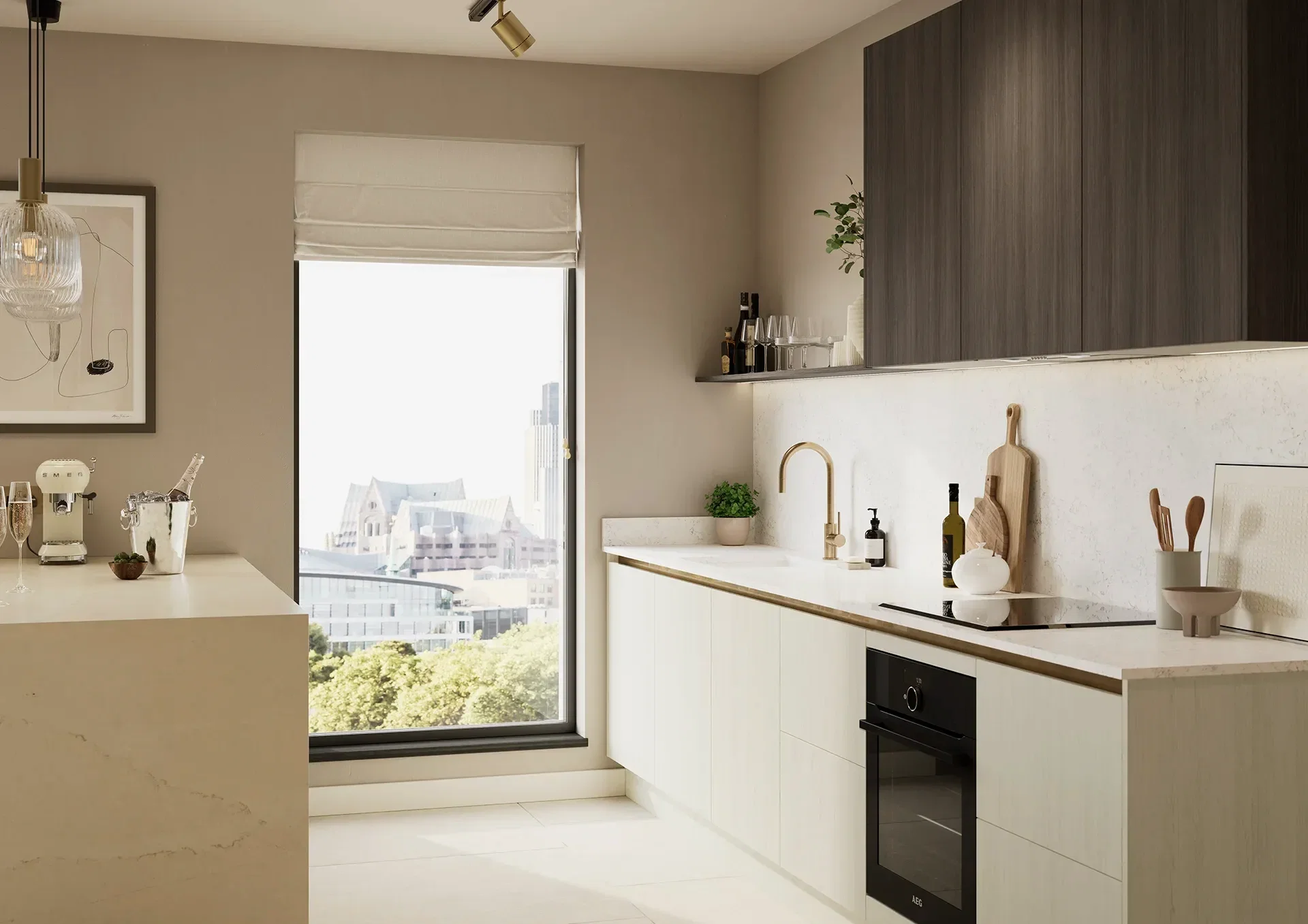
Handles, worktops and even appliances all influence how the finished kitchen feels. In many cases, changing the hardware can completely transform the look of the same door.
A shaker door with a slim, modern handle feels clean and contemporary, while the very same door paired with a cup and knob instantly leans more traditional. Neither is right or wrong; it’s about the mood you want the kitchen to set.
Worktops deserve just as much thought. Quartz surfaces with subtle veining can add elegance to a simpler door style, while wood-effect worktops often bring extra warmth to shaker kitchens and family spaces.
One thing we often tell customers is not to make these decisions in isolation. A door sample, cabinet sample and worktop sample viewed together will tell you far more than looking at each one separately on a screen.
Kitchen checklist:
It's easy to choose a kitchen door based on how it looks. The challenge is remembering you'll be living with it every day afterwards. Before making a final decision, think about what actually happens in your kitchen. Not the showroom version. The real version. Morning coffees before work. Dogs waiting hopefully beside the dishwasher. Packed lunches, Sunday roasts, homework spread across the table and guests leaning on the worktop while dinner's cooking. A kitchen used by a couple who enjoy entertaining at weekends will have very different demands to a family kitchen that's constantly busy. Likewise, an open-plan kitchen that's visible from the sofa will influence different decisions to a separate room that can simply be shut at the end of the day.
Kitchen life checklist:
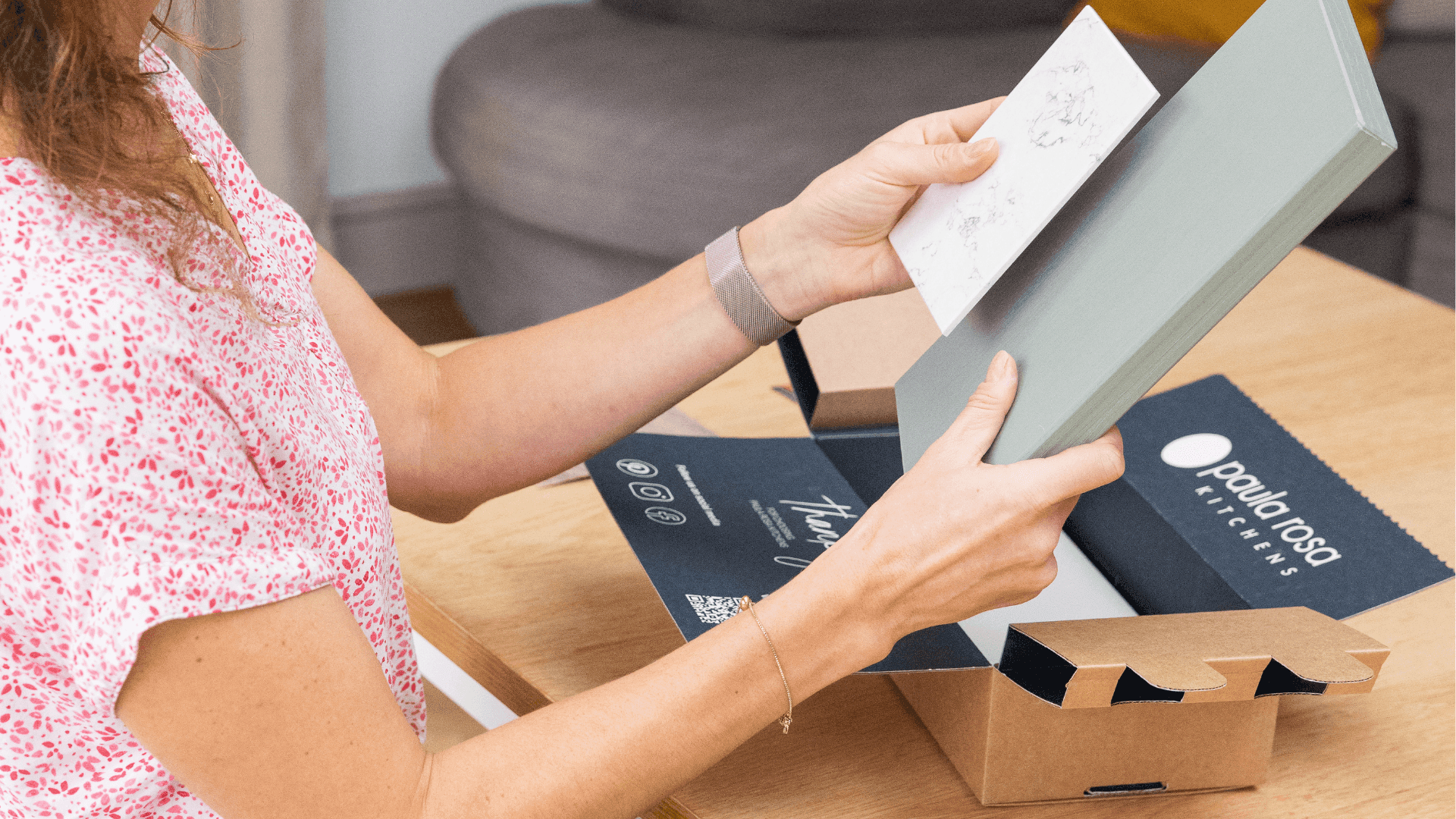
A kitchen door can look completely different depending on where you're viewing it.
Colours, textures and finishes often behave very differently on a screen compared to real life. That's why we always recommend seeing samples in person wherever possible. What feels like the perfect colour online can look completely different once natural light, flooring and worktops come into the equation.
It's also worth paying attention to the details you can't appreciate through a screen. The texture of a woodgrain finish. The softness of a super matt door. The depth of a painted shaker. These are all things that help you understand how the kitchen will feel once it's part of your home.
Order your free samples online, or if you're able to, visit our showroom in Lancing and compare different door styles side by side. Sometimes the decision you've been struggling with suddenly becomes much easier when everything is in front of you.
By this point, you've probably started to notice a pattern.
The kitchens you keep saving, the finishes you're drawn to and the colours you naturally gravitate towards are all leaving clues.
Maybe it's the character of a shaker door. Perhaps it's the simplicity of a slab design. Or maybe you're somewhere in between, mixing traditional and contemporary influences to create something that feels right for your home.
The good news is that there isn't a wrong answer. Kitchen door styles aren't about following trends or choosing what everyone else has. They're about finding a design that feels natural in your space and works for the way you live. Trust your instincts!
Seen a similar kitchen for cheaper? We’ll match the price.

Service that just gets it right, every time.

We’ve been building kitchens a long time.

Made right here in our Sussex factory.