

Price Match Promise
Seen a similar kitchen for cheaper? We’ll match the price.
20% off stone worktops until 11th November* Find out more
How to mix cabinets in a way that feels settled, not stressful.
Published
Mixing and matching kitchen cabinets is one of the easiest ways to add personality and depth to a space without shouting for attention. Done well, a two tone kitchen feels intentional and effortless. Done without a plan, it can feel busy fast and hard to settle into. The secret is knowing where to introduce contrast, and where to let things stay calm.
Every two tone kitchen needs a main character. Choose one cabinet style or colour to lead the space, usually the run with the most visual weight. Tall units, full height walls, or long base runs are good places to keep things consistent because they’re what you see first, and most often.
Once that’s decided, you can introduce contrast with confidence. Think of the second cabinet choice as a supporting role, not competition. One lead, one accent is usually enough.
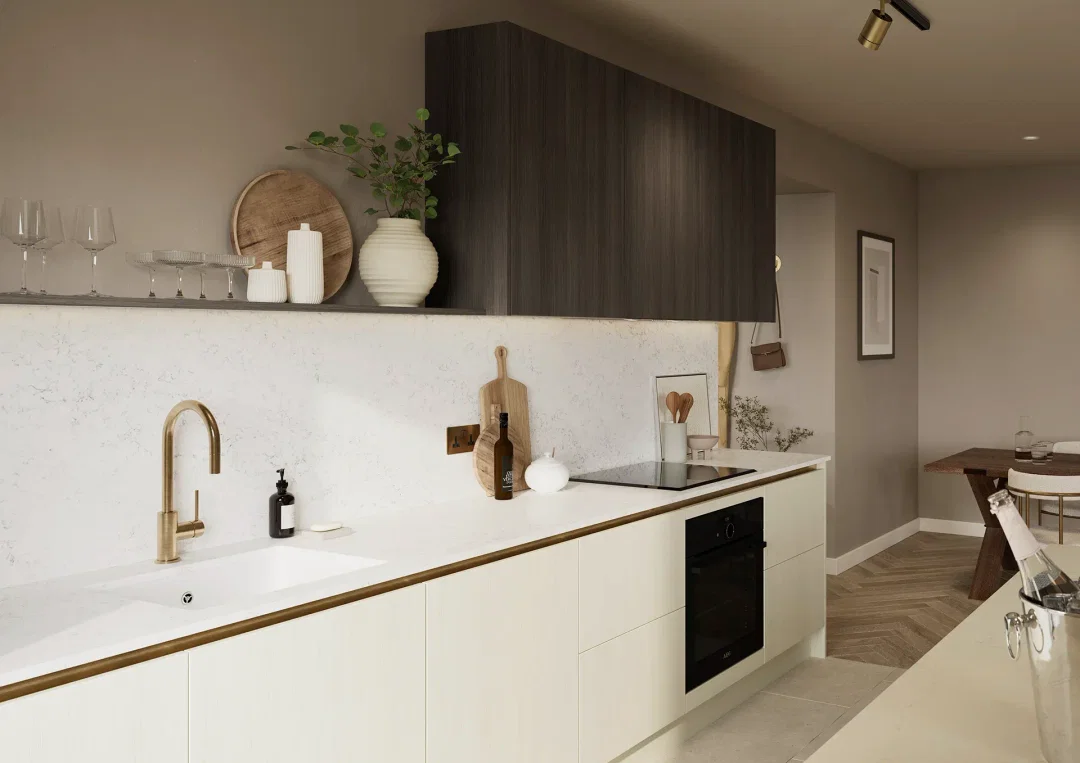
The most common and successful approach is mixing cabinet colours while keeping the door style the same. For example, darker base units with lighter wall units, or a statement island paired with neutral perimeter cabinets.
This works well in both new builds and older homes because it adds interest without disrupting flow. Keep undertones aligned. Warm colours together, cool colours together. If they sit in the same family, they’ll feel considered rather than clashing.
If you’re mixing door styles, keep one simple. Pairing a shaker door with a flat slab works far better than combining two detailed styles. Balance is what keeps the kitchen feeling calm when drawers are open, appliances are on, and life’s happening around it.

Islands, peninsulas, and larder runs are natural places to introduce a different colour or finish. They already sit as their own zone, so the change feels purposeful rather than random even when you’re moving around the space.
In open plan spaces, this helps define the kitchen without the need for walls. In smaller kitchens, zoning adds character without overwhelming the space. Be mindful with wall units and tall cabinets though. They carry more visual weight, so bold colours or detailed doors work best when used sparingly and balanced with calmer runs around them.
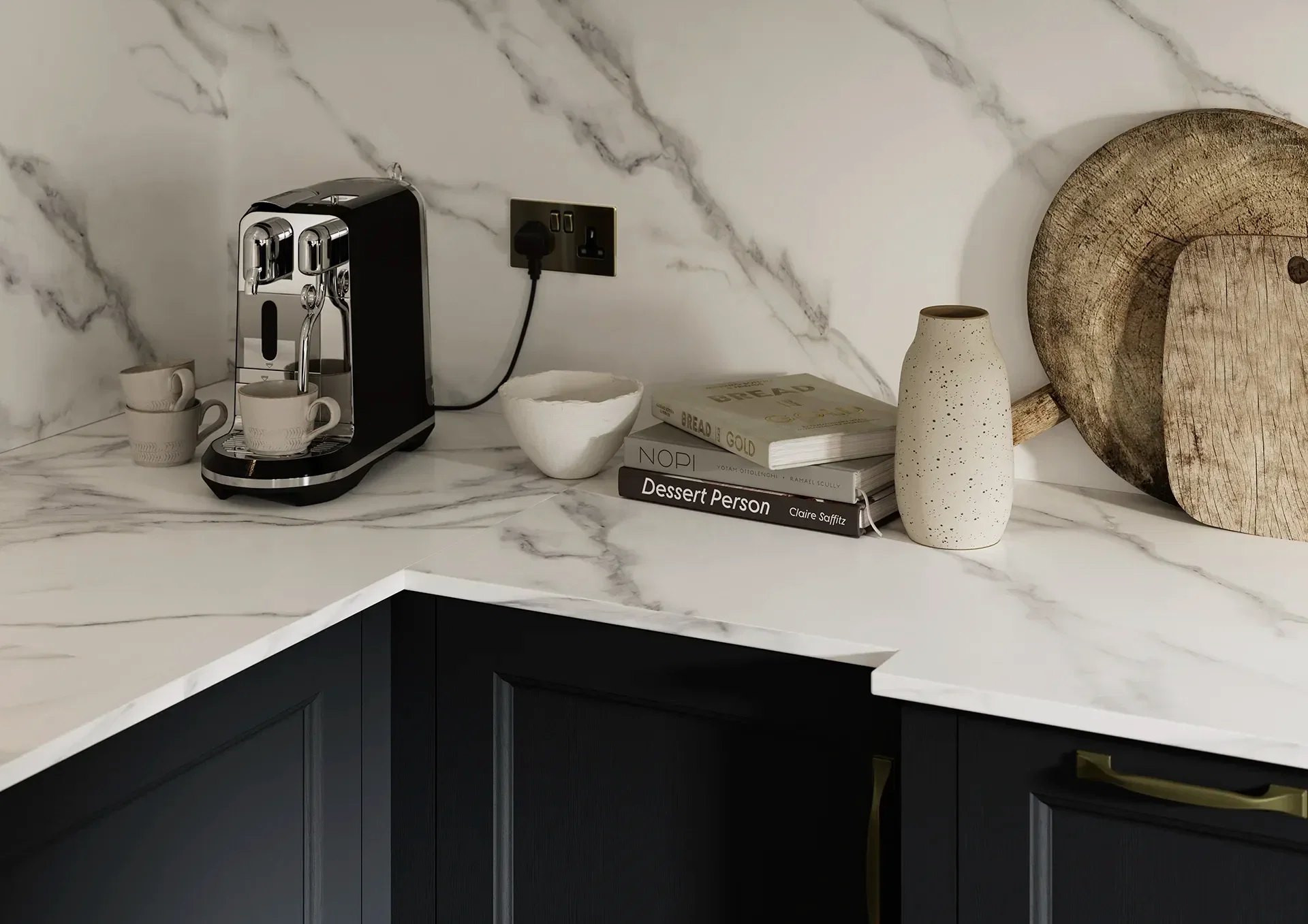
Handles, worktops, and plinths matter in a two tone kitchen. A single handle finish used throughout helps everything feel connected. The plinth – that’s the panel at floor level – usually works best matched to the main cabinet run to ground the space visually.
Once you think you’ve made your choices, take a step back and look at it with a fresh pair of eyes. What does it the overall look convey? Does it look calm and collected, or does it look frantic and busy?
Let's talk kitchen. Made in Sussex, designed for real life, and built to fit how you cook, gather and live, every day.
Explore our kitchensSeen a similar kitchen for cheaper? We’ll match the price.

Service that just gets it right, every time.

We’ve been building kitchens a long time.

Made right here in our Sussex factory.