

Price Match Promise
Seen a similar kitchen for cheaper? We’ll match the price.
20% off stone worktops until 11th November* Find out more
Practical styling tips to bring warmth, personality and flow to your kitchen.
Published
When people think about styling a kitchen, they often jump straight to accessories. A vase here. A chopping board there. Maybe a fancy coffee machine if the budget stretches. In reality, the kitchens that feel the most inviting aren't filled with more stuff. They're filled with the right stuff.
Good styling is about creating a space that feels lived in. A kitchen that works just as well for rushed breakfasts as it does for long Saturday lunches. Somewhere that reflects how you actually live, not how a showroom expects you to live.
The good news? You don't need to start from scratch. A few thoughtful changes can completely transform how a kitchen feels.
If you have woodgrain cabinetry, beautiful stone worktops or a soft matt finish, don't feel the need to compete with them. Good styling should complement what's already there, not distract from it. A kitchen that already has plenty of texture often needs less decorating than you think.
The same goes for the character of your home. In older properties, exposed brickwork, beams and original features bring personality all by themselves. In newer homes, styling is often your opportunity to add some of that character back in and stop the room feeling too uniform.
When in doubt, take your cues from the kitchen itself. A sleek handleless kitchen may suit simpler styling and cleaner surfaces, while a traditional shaker kitchen can often carry a few more decorative touches without feeling busy.
It's also worth remembering that styling doesn't have to happen overnight. The most welcoming kitchens rarely arrive fully formed. They evolve over time as you discover what works, what doesn't, and which pieces you genuinely enjoy living with.
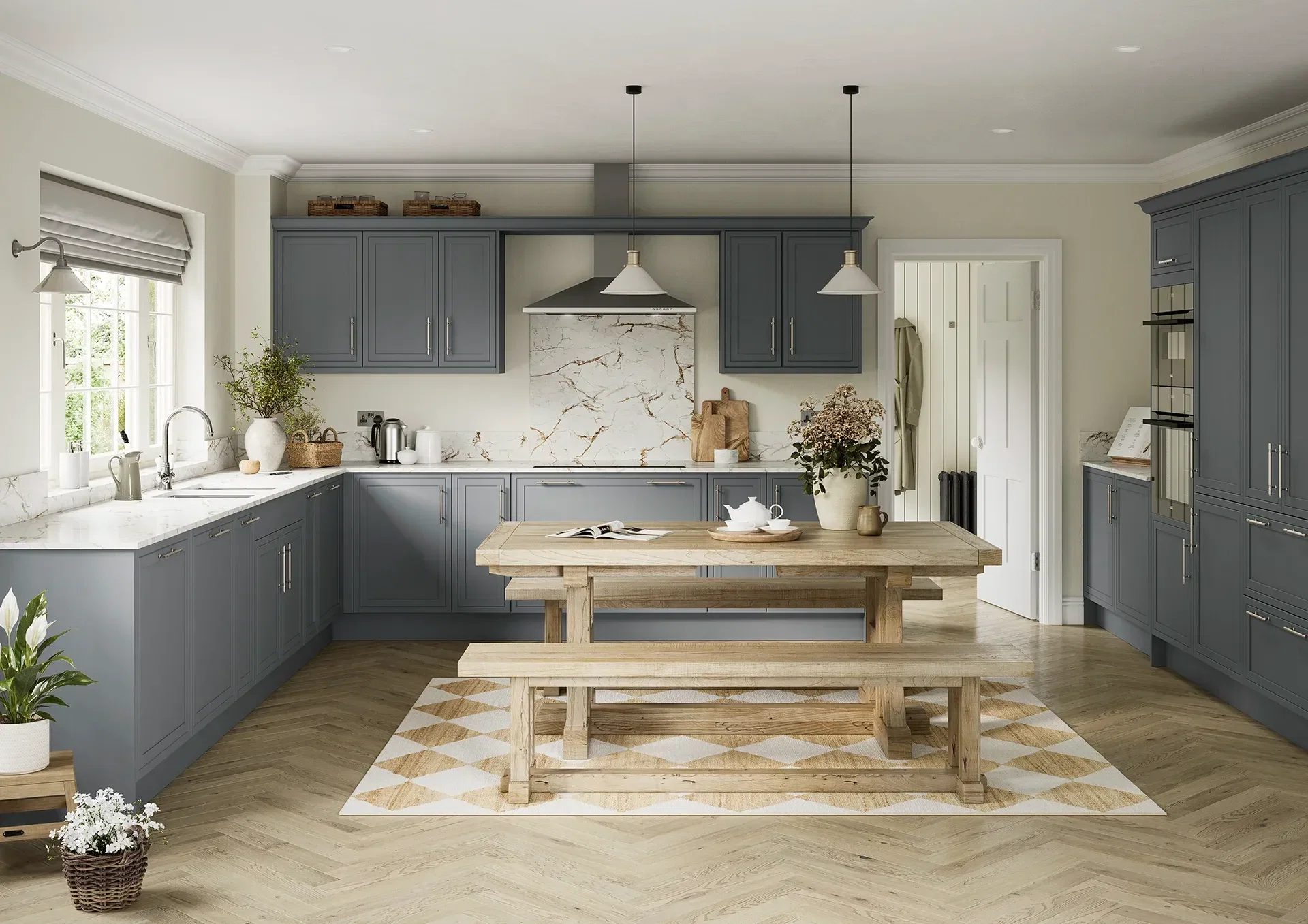
Before you buy anything new, take a look at what's already in the room.
Most kitchens don't need more styling. They need less clutter. Worktops become crowded surprisingly quickly. Coffee pods. Post. Children's artwork. That gadget you only use once a month but somehow never put away. If you’ve spent a lot of money on your worktop, the last thing you want to do is cover it all up!
Before adding anything decorative, clear the surfaces and start with a blank canvas. Don’t worry. The goal is to make space for the things that matter, not a minimalist kitchen where nobody is allowed to touch anything.
Once the visual noise disappears, you'll notice which pieces deserve to stay, and which can be stored elsewhere. One beautiful chopping board often has more impact than five random items competing for attention. The same applies to open shelving. Leave some breathing room. Empty space isn't unfinished. It helps everything around it stand out.
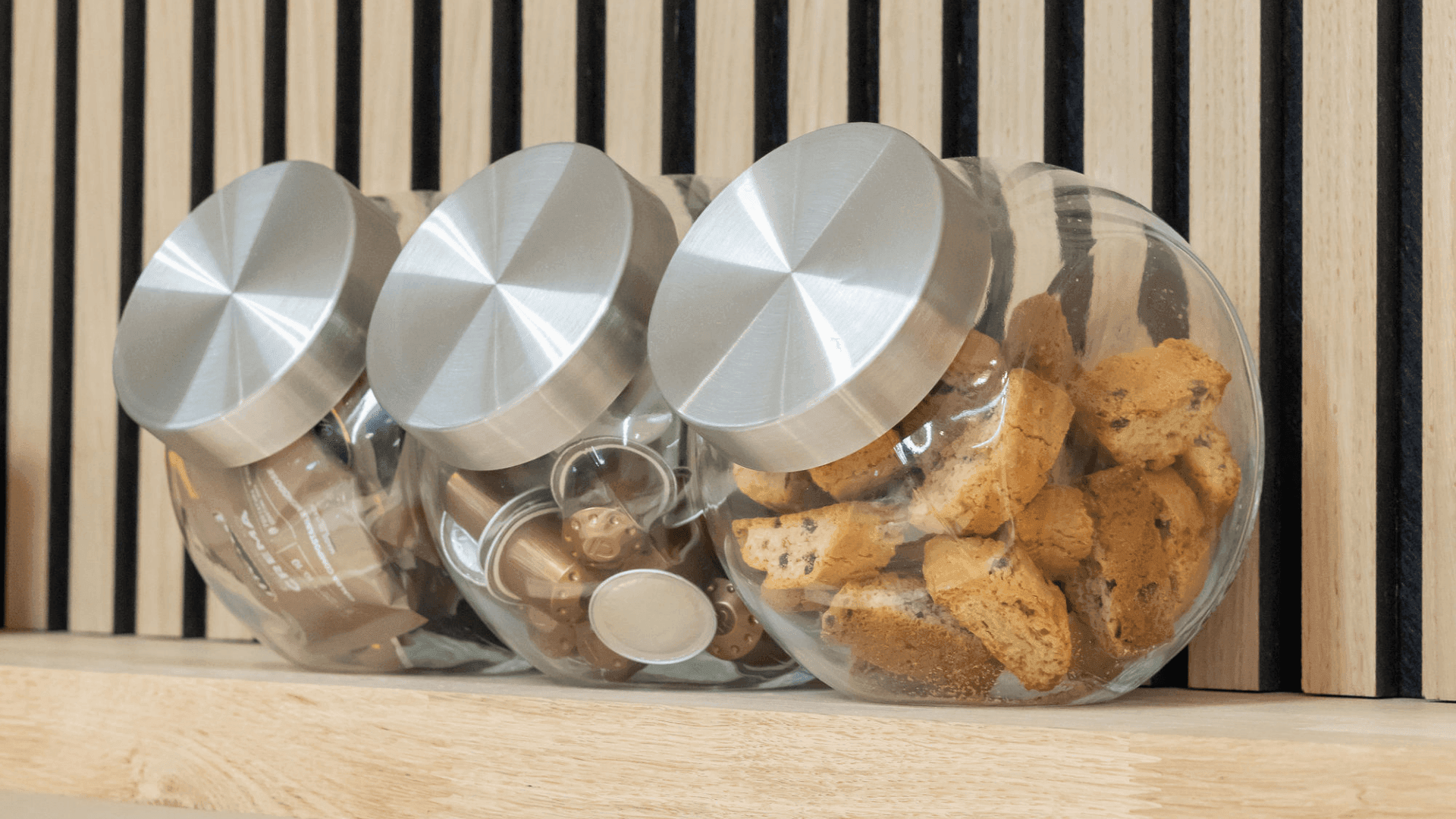
Now you’ve got a clean canvas, you’ll soon realise what everyday items you miss. A collection of favourite mugs. A well used recipe book with sauce splashes on it. A wooden utensil pot beside the hob. These are the items that tell the story of a home.
Ask yourself:
If the answer is no to all three, it probably belongs in a cupboard rather than on display and collecting dust.
Our Product Development Manager, Tamsin Holland has thoughts on this too: “A great example for this is small appliances. Not every appliance needs to live on the worktop. If something only comes out occasionally, giving it a home inside a cupboard can instantly make the space feel calmer. Save the valuable surface space for the pieces that genuinely earn their place.”
Try grouping similar items together too. Instead of having mugs spread across different surfaces, create a coffee corner. Rather than storing oils, salt and pepper separately, keep them together near the hob where they're actually used.
The best styled kitchens rarely feel staged. Instead, they make room for attractive, useful items that naturally belong there. If something is practical, well-made and enjoyable to look at, there's every chance it deserves a permanent home on display.
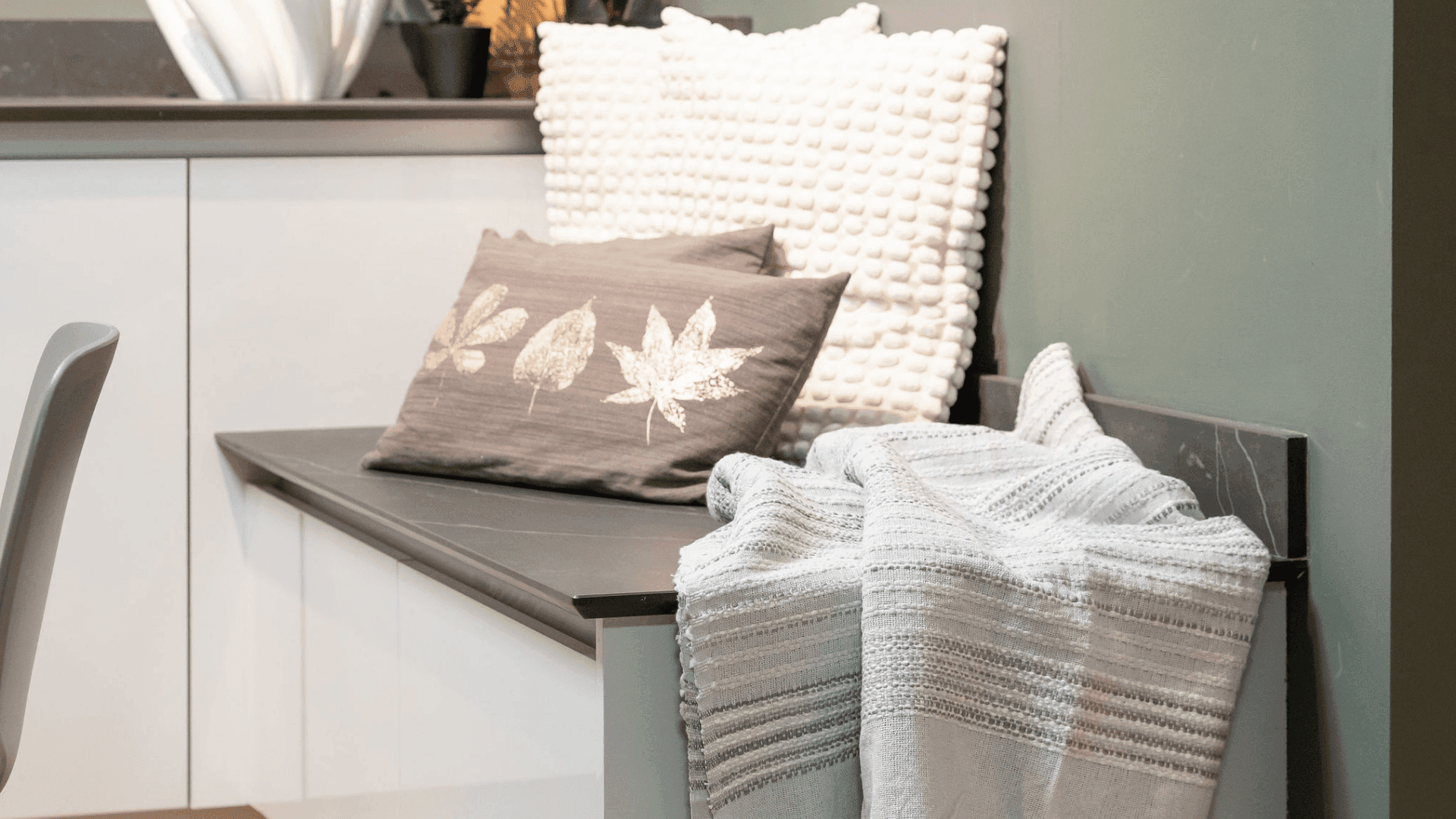
Introducing different textures can help balance the harsher materials found in most kitchens. After all, kitchens are naturally full of cabinetry, glass, stone and metal. While those materials are practical, they can sometimes leave a room feeling a little cold if they're not softened with other elements.
Wood is one of the easiest places to start. Chopping boards, serving platters, open shelving and bar stools can all introduce warmth without changing the overall design of the kitchen. In fact, these are the sorts of pieces professional stylists regularly use to make kitchens feel more welcoming and lived in. As highlighted in Ideal Home's guide to kitchen styling, simple additions such as wooden boards, ceramics and fresh produce can often have more impact than purely decorative accessories.
Textiles can make just as much difference. Fabric blinds, seat cushions, table runners and even tea towels help soften the room and make it feel more comfortable and welcoming.
Don't worry about everything matching perfectly either. In fact, kitchens often feel more authentic when textures evolve naturally over time. A woven basket picked up on holiday. A ceramic bowl you've had for years. A linen runner quickly bought because you liked the colour. Those layers are often what give a kitchen personality.
One of the easiest ways to make a kitchen feel more thought about is to style in zones rather than individual objects. This lets people experience your kitchen in ‘moments’.
Think about your day to day kitchen activities:
What would benefit those areas?
Open shelving can be a great way to create moments too. But don’t overdo it. It’s very easy to go from a curated look to crowded. Instead of filling every inch, try combining small plants, cookbooks or decorative bowls. Remember to leave breathing space around them.
If you're stuck staring at an empty shelf wondering where to start, Ideal Home's guide to the 3-5-7 styling rule is worth a read. The idea is simple: style in small groups rather than filling every available space. A few useful takeaways include:
Styling should support the rhythms of everyday life, not fight against them.
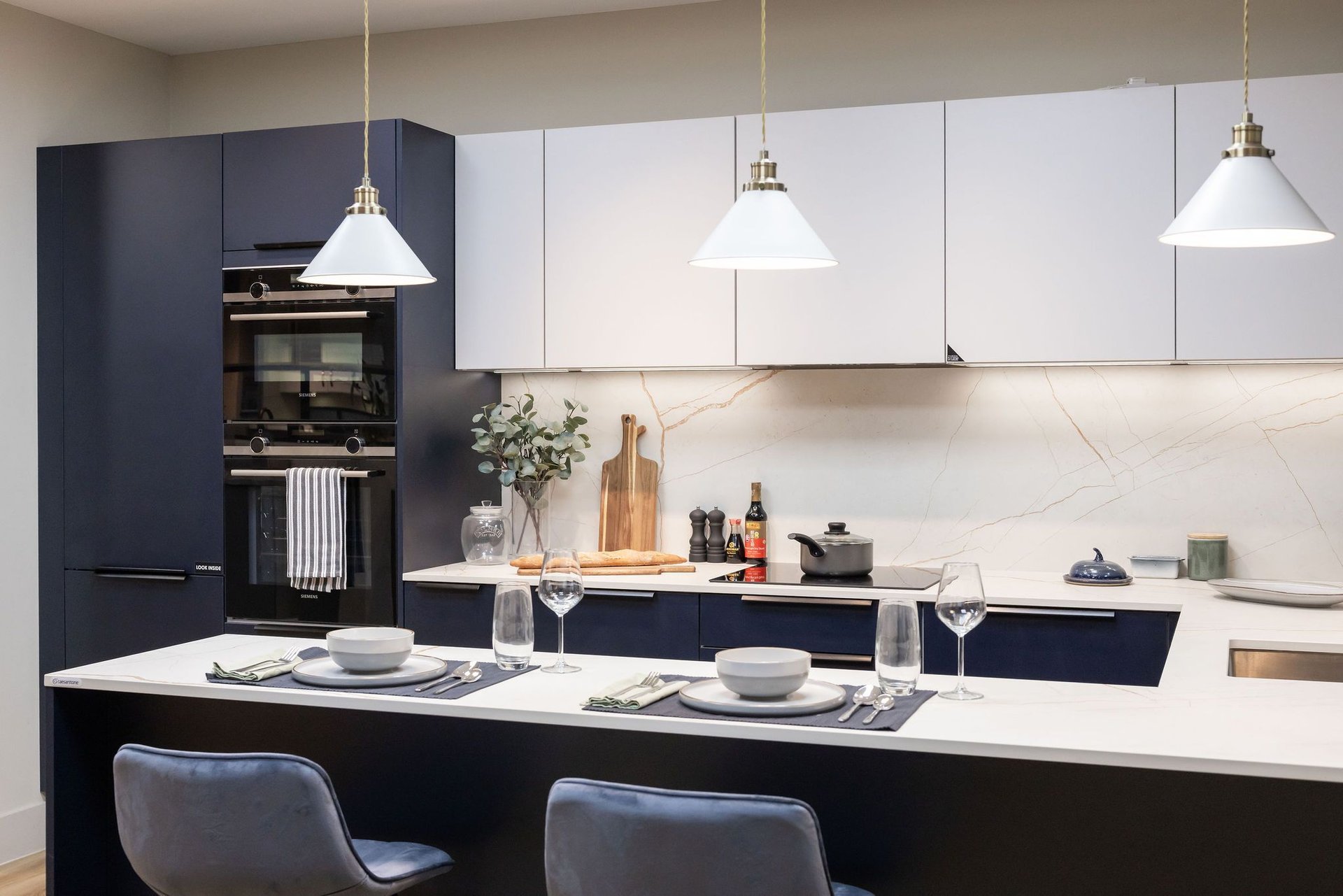
Lighting has one of the biggest impacts on how the kitchen feels, yet it’s often neglected and left til last.
Great lighting can change how the entire room is experienced and seen. That’s also why we suggest you order samples and see your doors and worktops in your own lighting.
Warm lighting, cool lighting, and even daylight through your window can greatly change how colours look. This is often shown as a number with a K for ‘kelvin’ shown after it. Warm White (around 3000K) is more inviting and suitable for a more relaxed feeling. Cool White (around 4000K) is brighter and more suited for practical tasks.
The most successful kitchens use a combination of different lighting types:
The best kitchens feel just as welcoming at 9pm as they do at 9am, and good lighting plays a huge part in making that happen.
Many modern kitchens aren’t separate rooms anymore. They’re dining rooms, living spaces, homework and office stations. Sometimes all in the same afternoon. That means styling shouldn’t stop at cabinetry.
Think about the surrounding elements too:
Try repeating small details across the room:
The goal isn’t for everything to match, it’s simply to make your kitchen feel connected and part of the wider home.
One of the biggest misconceptions about styling is that once you've finished, you're done. The reality is that the most inviting kitchens are always evolving.
Spring often brings fresh flowers and brighter colours. Summer arrives with bowls of seasonal fruit, herbs on the windowsill and the barbecue accessories suddenly returning from storage. Autumn naturally introduces richer textures, deeper tones and a few extra candles. Then winter arrives, along with festive decorations, fairy lights and enough greenery to rival a garden centre.
These changes don't need to be expensive. They simply help the kitchen reflect what's happening outside. A bowl of clementines. A vase of fresh flowers. A different table runner. A seasonal candle. Small updates often make the biggest difference because they keep the room feeling current without changing its identity.
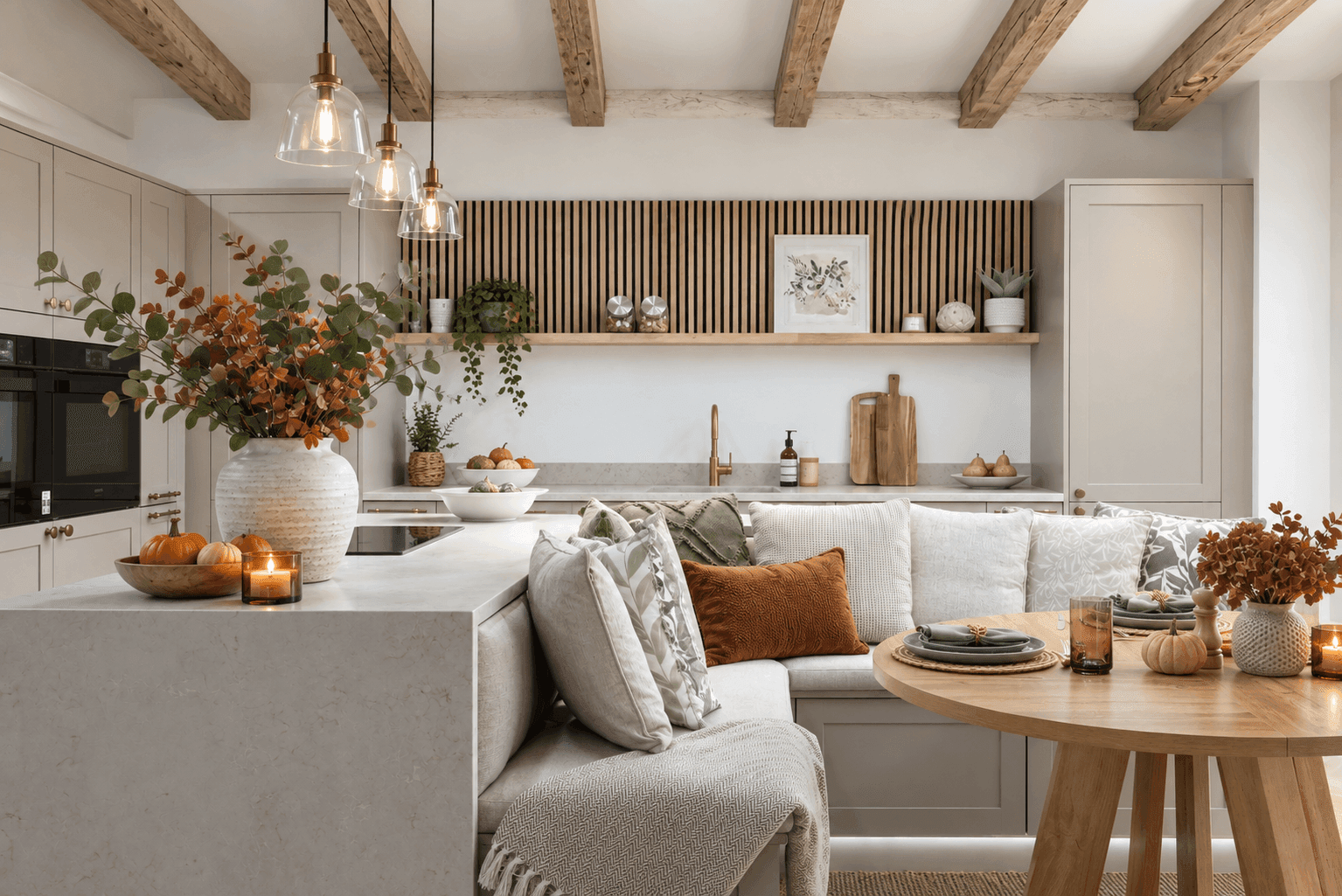
When you think about your favourite kitchens, they probably aren't the ones that looked like showrooms. They're the ones where life happened.
The kitchen with the favourite mug permanently parked beside the kettle. The dining table that's seen everything from birthday cakes to spelling tests. The island where somebody is always leaning while dinner’s being made.
Good styling isn't about impressing visitors or chasing trends. It's about creating a space that feels welcoming, practical and personal.
So start small. Clear a worktop. Group a few favourite pieces together. Move a plant. Add a lamp. Let go of the things that don't earn their place, and add some personality and character back in. Then give it time.
The best styled kitchens feel like home, not a showroom.
Seen a similar kitchen for cheaper? We’ll match the price.

Service that just gets it right, every time.

We’ve been building kitchens a long time.

Made right here in our Sussex factory.