

Price Match Promise
Seen a similar kitchen for cheaper? We’ll match the price.
20% off stone worktops until 11th November* Find out more
From family breakfasts to evening entertaining, how handleless kitchens fit modern living
Published
Looking for handleless kitchen ideas? You're not alone. Handleless kitchens have become a popular choice for homeowners who want a kitchen that feels calm, organised and easy to live with. A lot of people are drawn to the look first. Then the questions start. Are they practical? Do they suit family life? Will they work in my space? That's exactly what we'll cover here, along with the different styles available and the handleless kitchen designs we're seeing customers choose time and time again.
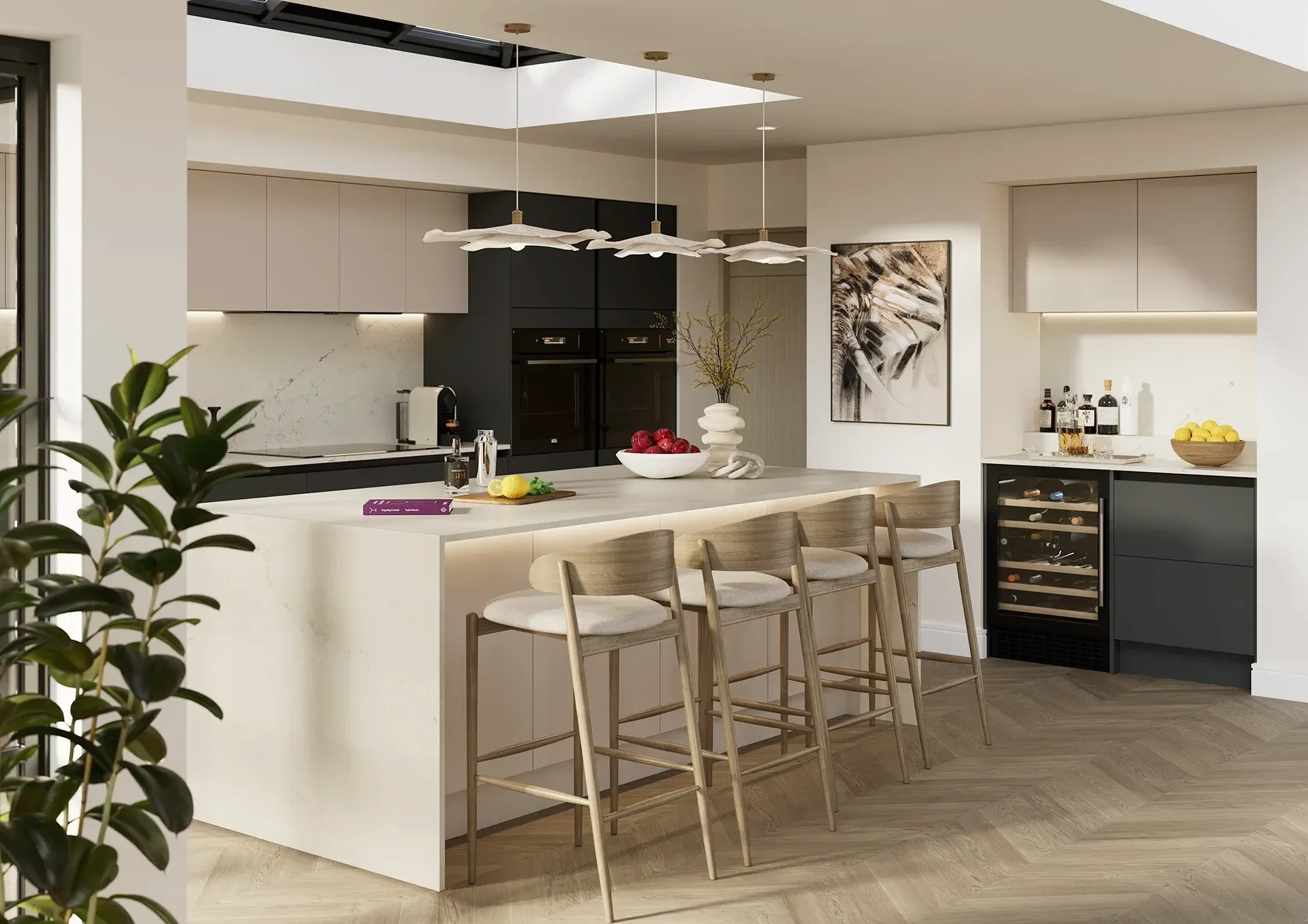
Put simply, a handleless kitchen removes the traditional handle from the front of the cabinet.
Instead of reaching for a knob or pull handle, you open doors and drawers using a built-in grip. The result is a cleaner look, but there are practical benefits too. Nothing sticking out. Nothing catching pockets, sleeves or shopping bags as you move around the room.
One thing customers oftentell us is that handleless kitchens feel calmer somehow. Fewer visual interruptions and less going on for the eye to process. It's one of the reasons people often describe handleless kitchens as feeling calmer.
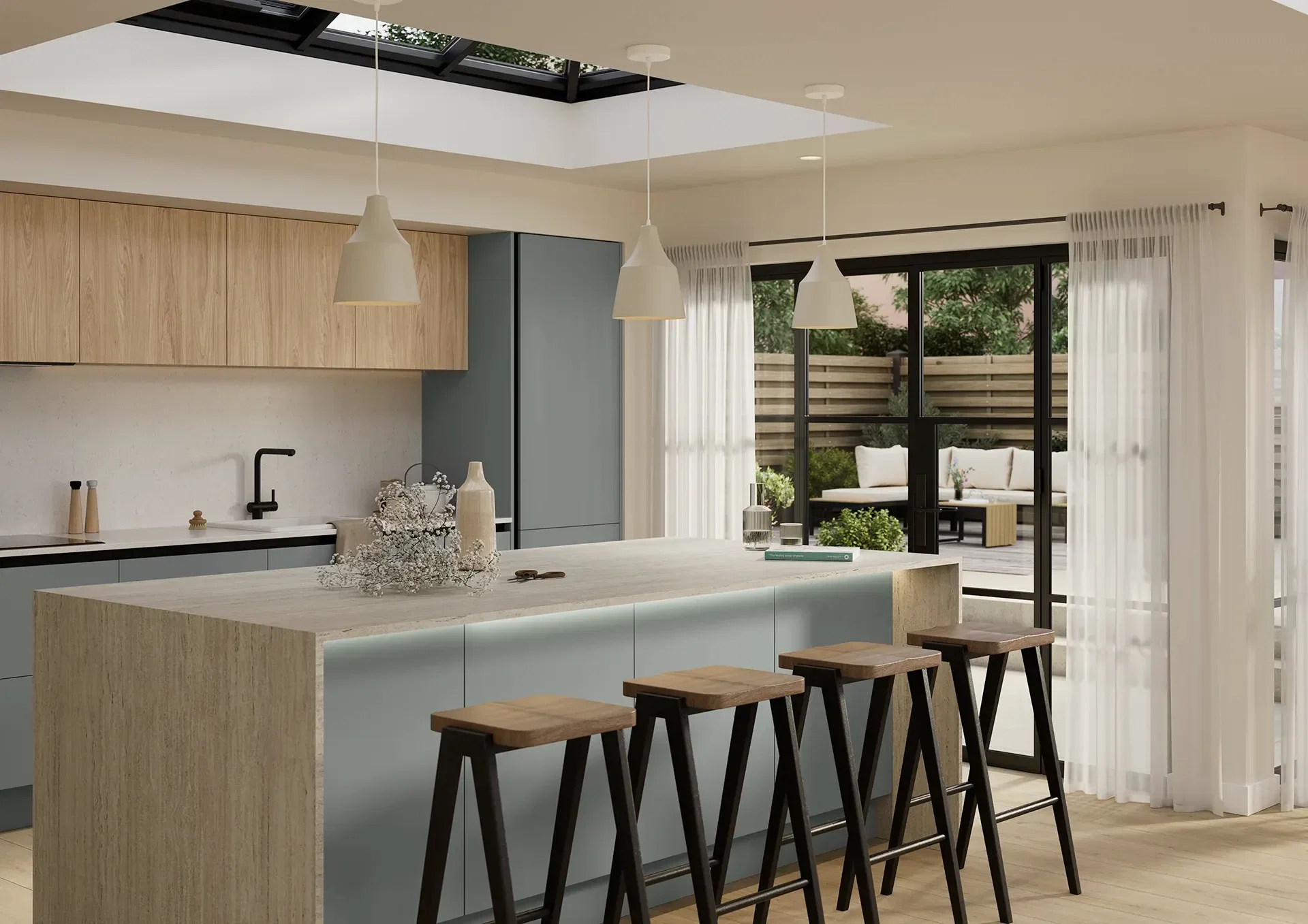
That's especially true in open-plan homes, where the kitchen is visible from almost every angle. From the dining table, the sofa or even out in the garden looking back through bi-fold doors. Without handles breaking up the cabinetry, the whole space can feel a little more connected.
Most people are drawn to the look first, but practicality plays a part too. No protruding handles means less chance of catching clothing as you walk past and fewer places for dust and everyday grime to settle.
We've also found that handleless kitchens tend to work particularly well in busy family homes. When you've got multiple people moving around the space at once, from making packed lunches in the morning to unloading the weekly shop in the evening, those uninterrupted runs of cabinetry can make the room feel a little less crowded.
The funny thing is that most homeowners stop noticing their kitchen is handleless after a few days. It simply becomes part of how the room works. That's often the sign of good kitchen design. It feels natural, fits into everyday life and quietly gets on with the job.
It's one of those design choices that tends to make more sense the longer you live with it.
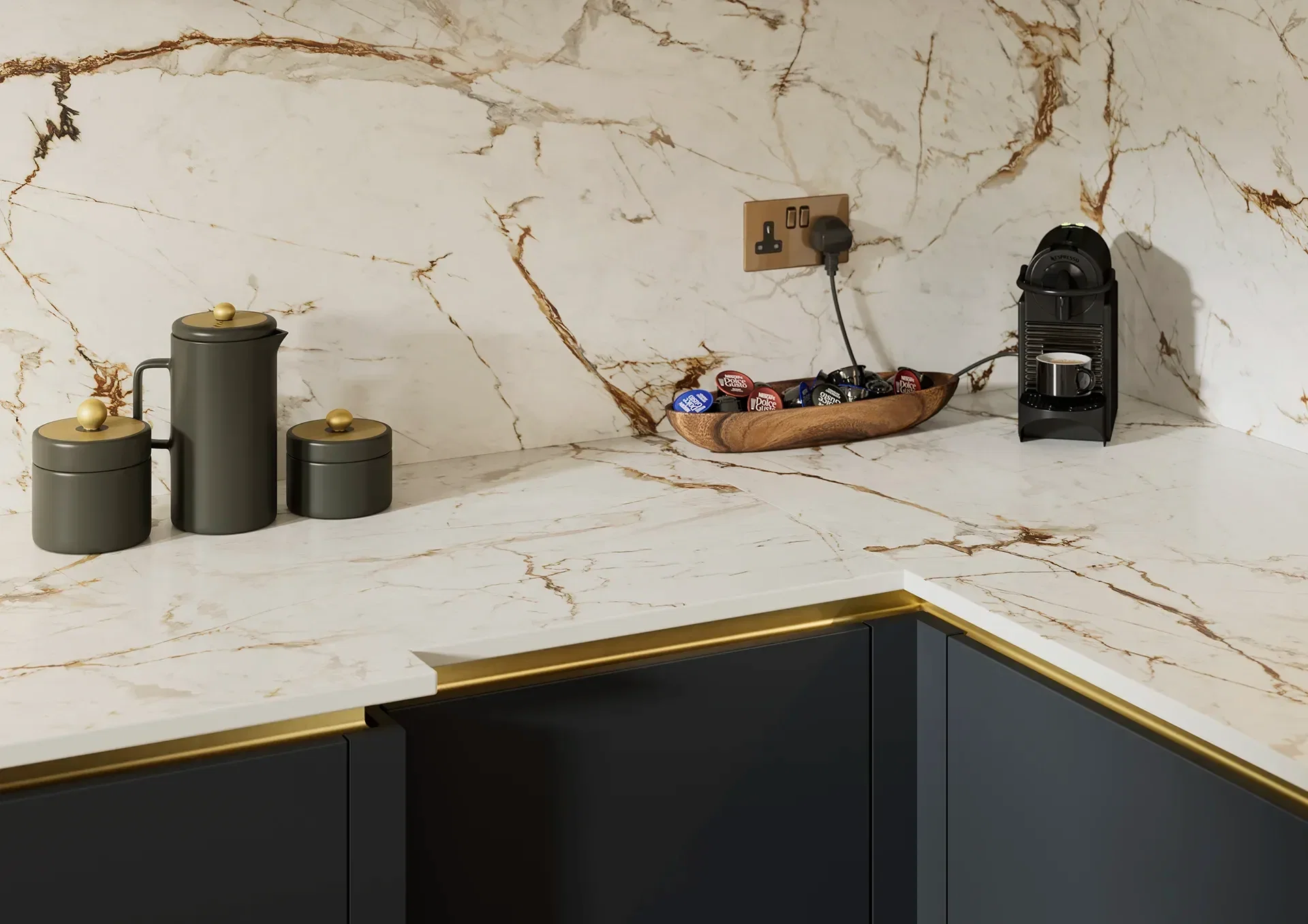
One of the first things you'll discover when researching handleless kitchens is that the term can mean slightly different things depending on who you're talking to.
Some people use it to describe any kitchen without a traditional handle attached to the door. Others use it specifically to describe kitchens that use a hidden rail system called a gola rail, which sits between the worktop and the doors, and between banks of drawers and tall units. Rather than pulling on a handle, you simply reach into the channel and open the cabinet from behind the door front.
The good news? Both achieve the same thing: clean-line confidence, uninterrupted cabinetry and less visual clutter across the kitchen.
The two styles you'll come across most often are integrated handle kitchens and handleless kitchens with gola rails.
Integrated designs, such as our Manhattan and Fontwell ranges, build the grip directly into the door itself. They're often grouped under the handleless umbrella because there's no separate handle fixed to the front.
Gola rail kitchens are typically paired with slab doors for a sleek, contemporary look, though we're seeing growing interest in handleless shaker kitchens too. They combine the character of a framed door with the clean-line confidence of a handle-free design.
Customers often gravitate towards integrated handles because they feel familiar straight away. The grip is easy to find and intuitive to use, while still delivering that clean, modern look.
We've found most customers know which one they prefer within seconds of opening the door. The look might be similar, but the experience is slightly different.
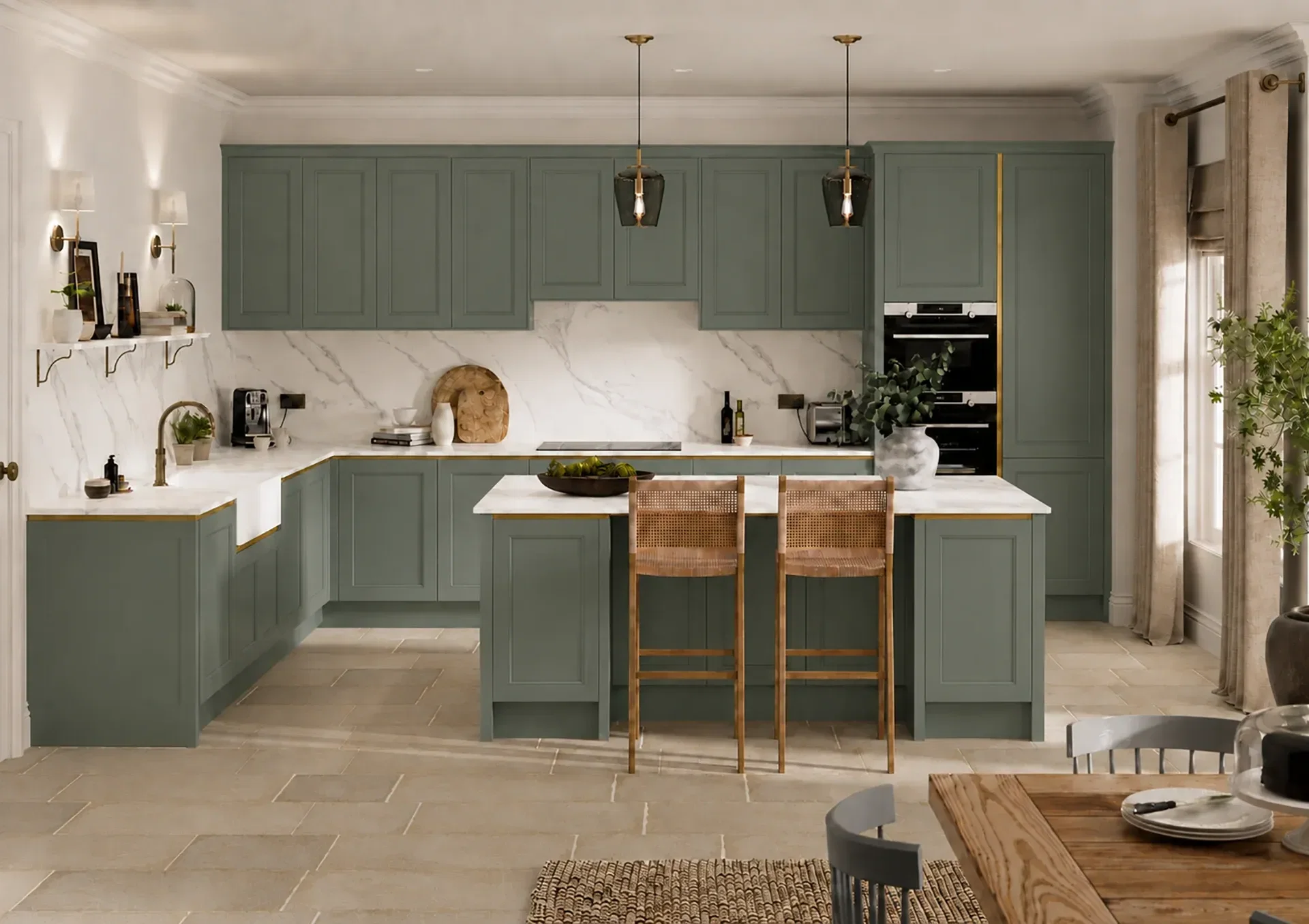
One of the biggest misconceptions about handleless kitchens is that they only work in large, modern homes. In reality, they're surprisingly flexible and can work across a wide range of kitchen layouts. The key is understanding how the clean lines and uninterrupted cabinetry can help the space feel and function. In some kitchens, that's about creating a sense of openness. In others, it's about making everyday movement a little easier.
When space is at a premium, every detail matters.
Without handles breaking up long runs of cabinetry, a handleless kitchen can help a smaller room feel calmer and a little less busy. It's a subtle difference, but one customers often notice when comparing designs side by side.
We've also found that clean, uninterrupted doors work particularly well in compact kitchens where you're already trying to make the most of every inch.
When worktops are already working hard and storage space is at a premium, uninterrupted cabinetry can help the room feel a little more relaxed.
Handleless kitchens and open-plan living tend to get along very well.
When your kitchen, dining area and living space are all visible at the same time, a handleless design can help everything feel more connected. When you're sat at the dining table or relaxing on the sofa, the kitchen feels more like part of the living space and less like a separate room.
That's one of the reasons we see so many customers choosing handleless designs for extensions and open-plan family spaces.
If you've ever tried squeezing past someone unloading the dishwasher in a narrow kitchen, you'll understand the appeal here.
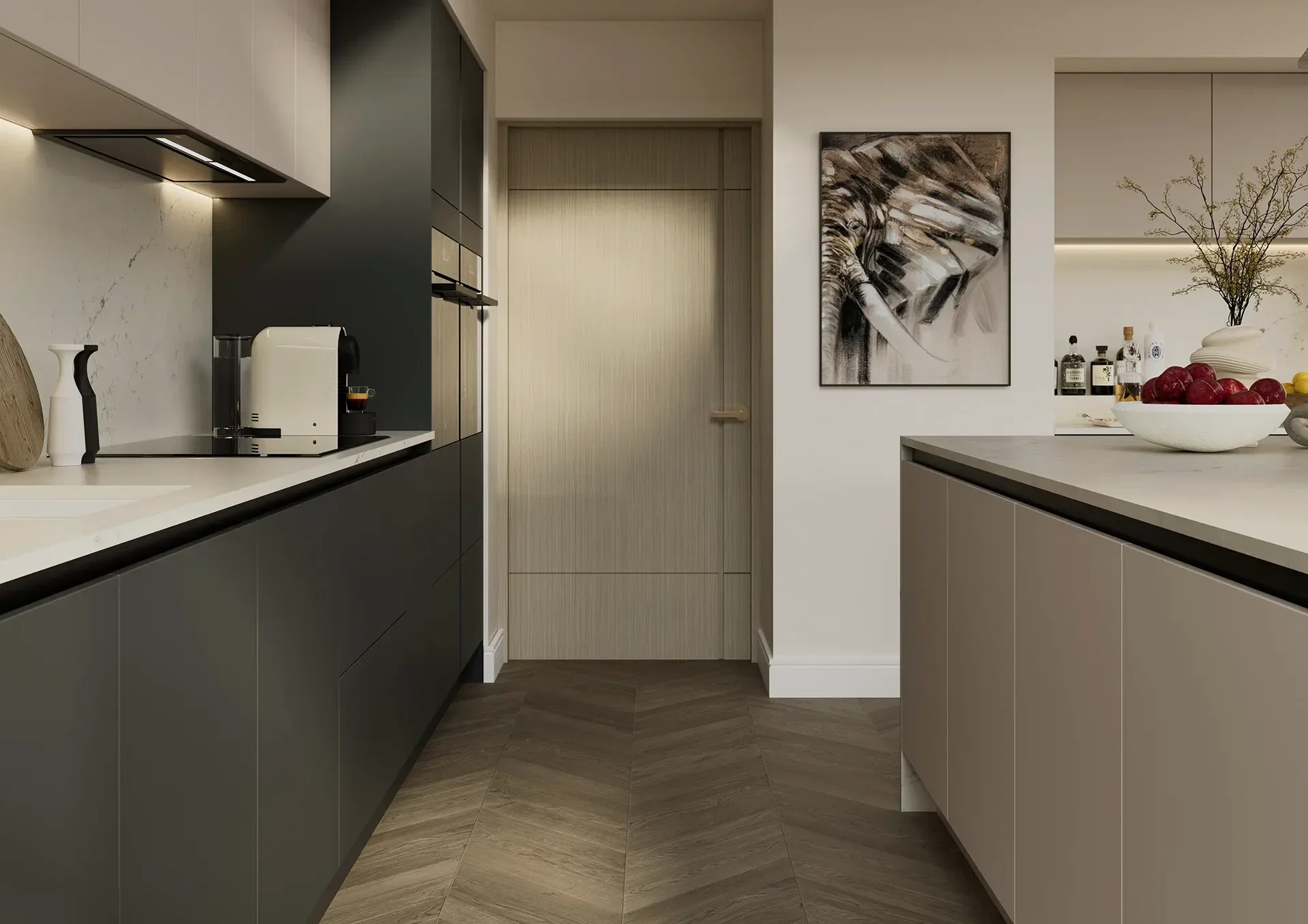
With no handles protruding into walkways, galley kitchens can feel a little easier to navigate day to day. It's not a dramatic difference, but it's one of those small details that people appreciate once they're actually living in the space. For narrower layouts, that extra bit of breathing room can go a long way.
It's one of the questions we hear most often.
The short answer? Yes.
Most people stop thinking about the fact their kitchen is handleless surprisingly quickly. Opening cupboards and drawers becomes second nature, whether you're putting shopping away, grabbing ingredients while cooking or unloading the dishwasher after dinner.
In fact, many homeowners find the kitchen feels easier to move around once it's in use. With nothing protruding from doors and drawers, walkways remain clearer and the room can feel a little less cluttered.
Handleless kitchens can work particularly well in busy family homes. Little ones racing through the kitchen, school bags being dropped by the island and multiple people cooking at once all create plenty of opportunities to bump into traditional handles. Removing them helps create a smoother flow through the space, especially in narrower layouts.
They're also worth considering if accessibility is a priority. Everyone's needs are different, but many people find integrated grips and gola rails comfortable to use because there are no small knobs or handles to grasp. If mobility, dexterity or accessibility are important considerations, we'd always recommend trying different options in person to see what feels most natural.
Perhaps the biggest thing people don't expect is how quickly a handleless kitchen starts to feel normal. The focus shifts away from how it opens and onto everything else. Family dinners, rushed breakfasts, unloading the weekly shop and all the little moments that happen around a kitchen every day.
Like any kitchen style, it's about choosing the right design for the way you live. That's why we always encourage customers to try different options in person rather than relying purely on photos.
One of the reasons handleless kitchens have remained so popular is their ability to adapt. The clean-line look might stay the same, but the overall feel of the kitchen can change dramatically depending on the door style, colour and finish you choose. We're seeing customers move away from the idea that handleless automatically means all-white and ultra-modern. Today's handleless kitchens are warmer, more personal and designed around everyday life. Whether that's a busy family kitchen, an open-plan entertaining space or somewhere in between, there are plenty of ways to make the style your own.
Tamsin Holland, Product Development Manager
Integrated handle kitchens build the handle directly into the door itself. Rather than attaching hardware to the front of the cabinet, a recessed grip is formed within the door, giving you somewhere comfortable to place your fingers and pull it open.
You'll often hear this style referred to as a J-Pull kitchen. While it doesn't have a traditional handle attached to the front, the grip is still part of the door itself.
Customers often like this option because it delivers many of the benefits of a handleless kitchen while feeling familiar to use from day one. It's one of those designs that just makes sense. No extra hardware, nothing sticking out, just simple cupboard logic that works.
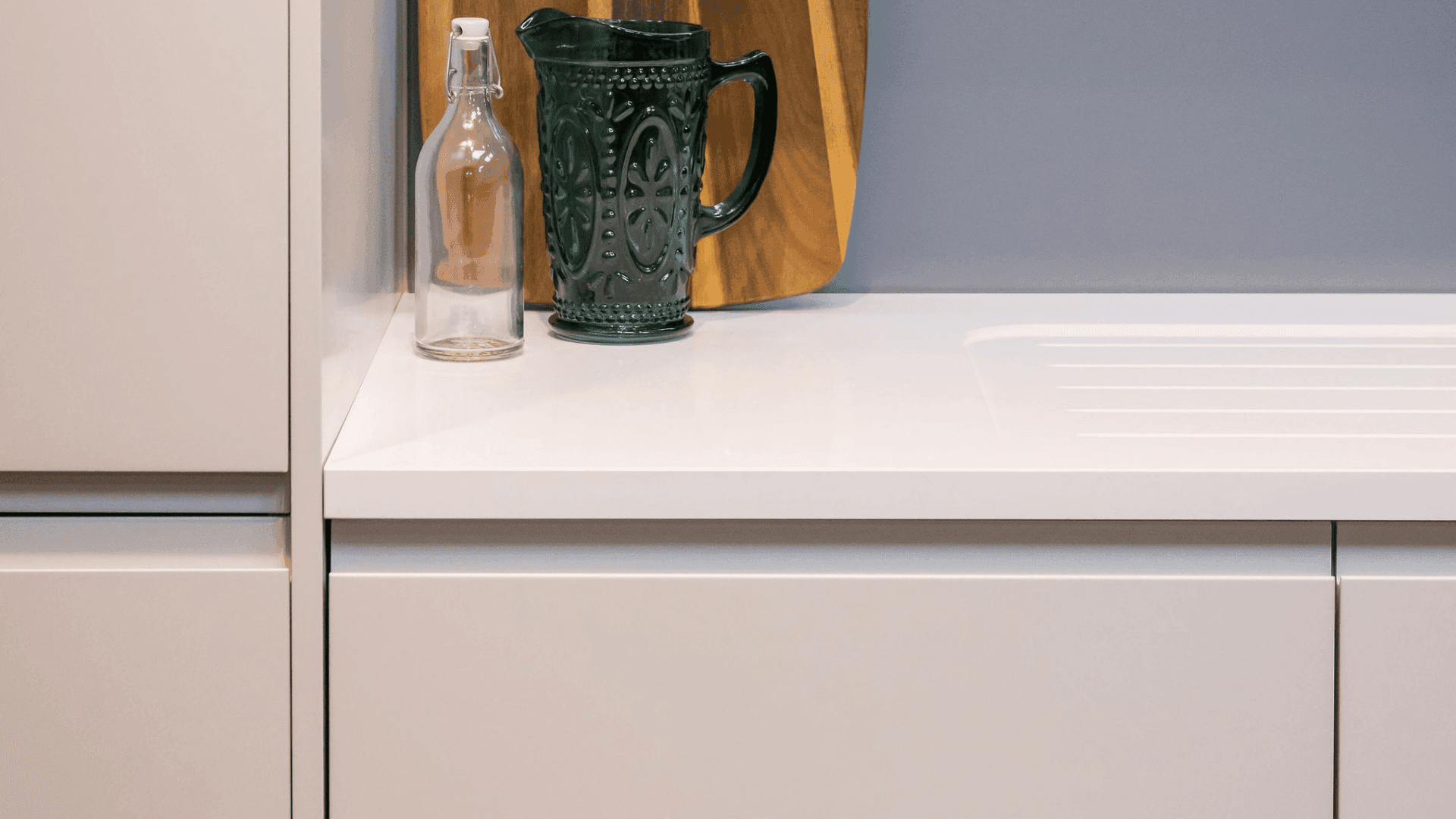
For years, handleless kitchens were often associated with white, grey and gloss finishes. That's changed.
We're seeing more customers choose deeper, richer colours such as Reed Green, Indigo Blue, Cashmere and Taupe. Without handles competing for attention, richer colours have a little more room to breathe.
It's a combination that works particularly well in open-plan homes, where the kitchen is expected to feel connected to the rest of the living space rather than separated from it.
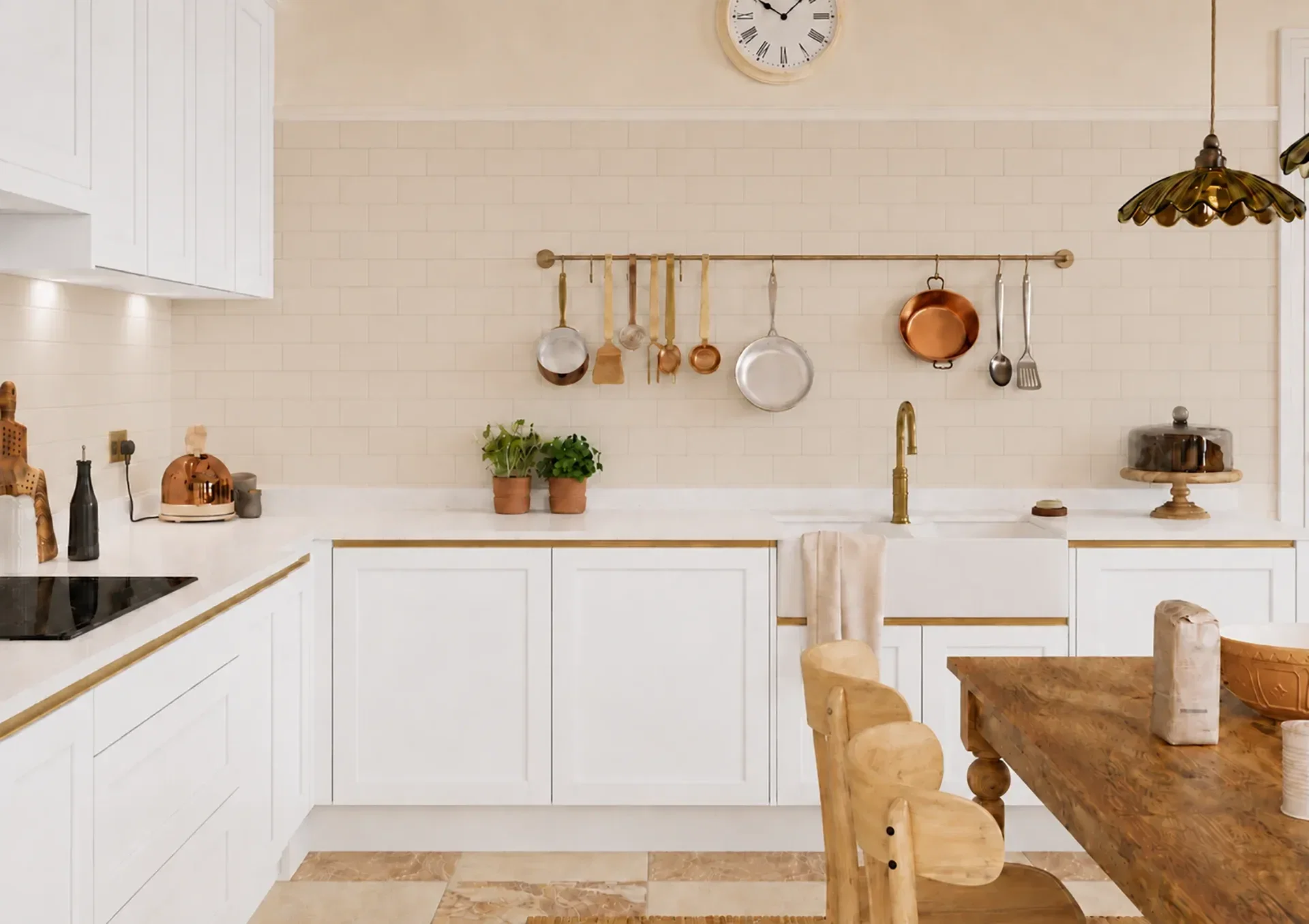
Perhaps the biggest surprise for many homeowners is that handleless kitchens don't have to be slab doors.
Handleless shaker kitchens have grown in popularity because they combine two things people love: the character of a framed door and the simplicity of a handle-free design. We've seen plenty of customers arrive convinced they're choosing between shaker and handleless, only to discover they don't have to. A handleless shaker kitchen offers a nice middle ground. Traditional enough to feel welcoming, contemporary enough to feel current and practical enough for everyday family life.
The result sits comfortably in the middle. Warm and welcoming, but still fresh and contemporary. Full of character, but without the visual clutter of traditional handles. For many families, it's a best-of-both-worlds option that feels just as good to live with as it does to look at.
Seen a similar kitchen for cheaper? We’ll match the price.

Service that just gets it right, every time.

We’ve been building kitchens a long time.

Made right here in our Sussex factory.